
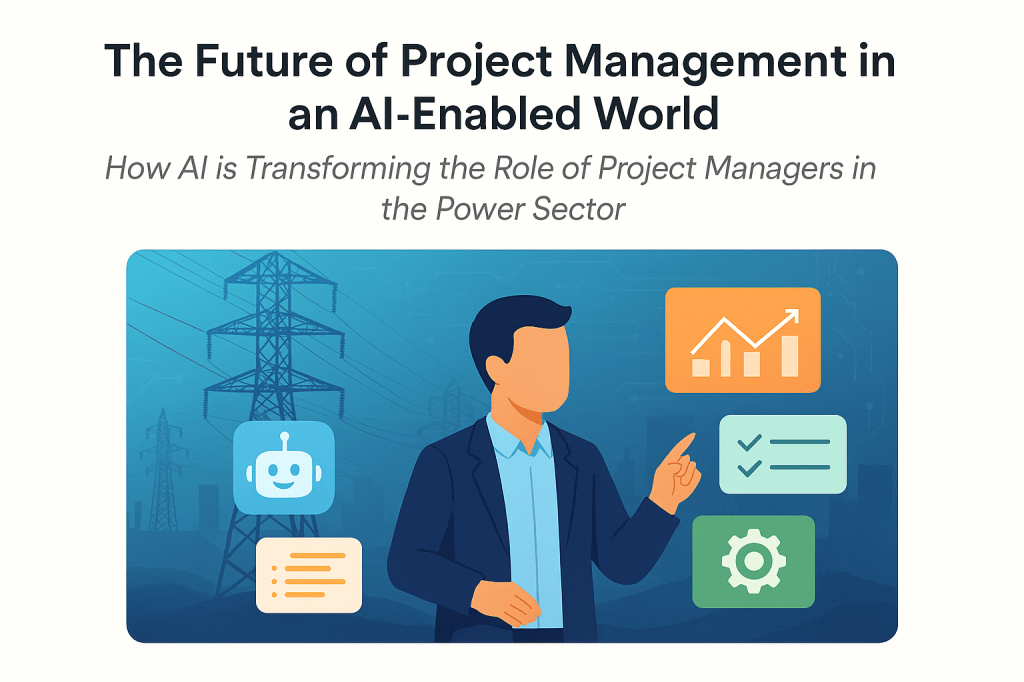
In the fast-evolving landscape of project management, hybrid human-AI teams integrated within Agile frameworks represent a transformative force, particularly for complex infrastructure projects like electrical transmission lines and substations.
The power sector is in the midst of a once‑in‑a‑generation transition. Grid modernization, rapid renewable integration, distributed energy resources (DERs), stricter environmental norms, and supply‑chain volatility are making projects larger, faster, and more complex.
Add to this the pressure of regulatory compliance, sustainability goals, and cost optimization. In this environment, Artificial Intelligence (AI) is redefining what it means to lead projects. The role of the project manager (PM) is moving beyond coordination and reporting to strategic orchestration, risk intelligence, and outcome assurance. For project managers in this sector, AI is not just a tool—it’s a game-changer.
By blending human creativity, emotional intelligence, and strategic foresight with AI’s unparalleled speed in data processing and automation, these teams unlock unprecedented efficiency and adaptability.
Project managers (PMs) can delegate routine tasks—such as scheduling, resource allocation, risk logging via Excel COUNTIFS formulas, and generating MIS dashboards with donut charts—to AI co-pilots, freeing themselves to lead with vision and stakeholder alignment.
This synergy not only accelerates project delivery but also mitigates common pitfalls like delays in 400kV/765kV builds, where traditional methods often falter under scope creep or unforeseen risks.
Agile methodologies amplify these benefits through iterative sprints, daily stand-ups, and retrospectives, creating a rhythmic cadence where AI handles the tactical grind while humans steer the strategic helm.
Imagine a transmission line EPC project: AI scans IoT sensor data from towers to predict maintenance needs in real-time, auto-adjusts Gantt charts in MS Project for weather disruptions, and drafts progress reports for stakeholders.
Meanwhile, the PM facilitates cross-functional retrospectives, interprets nuanced team dynamics, and negotiates with regulators—tasks demanding empathy and contextual judgment that AI cannot replicate.
Research highlights productivity gains of 30-50%, with cycle times slashed by automating up to 40% of administrative workloads, allowing teams to pivot faster in volatile environments.
The advantages extend beyond speed to enhanced decision-making and risk mitigation. In hybrid Agile setups, AI’s predictive analytics—drawing from historical data—flags behavioral biases in PM judgments, such as over-optimism in timelines, fostering more objective planning. This is crucial in high-stakes construction, where emotional factors can inflate costs by 20%. Human oversight ensures ethical guardrails, validating AI outputs through “human-in-the-loop” (HITL) protocols to counter algorithmic biases, especially in regulated sectors like power grids. Stakeholder engagement soars too: AI-generated visuals and automated updates build trust, while PMs focus on personalized communication, turning potential conflicts into collaborative wins.
Scalability emerges as another cornerstone benefit. Hybrid teams excel in portfolio management, balancing multiple projects with AI-orchestrated resource optimization, reducing overallocation in EPC crews. Upskilling becomes seamless via Agile’s continuous learning loops—short VR simulations train PMs on AI tools without disrupting sprints. For professionals in Delhi’s booming infrastructure scene, this model future-proofs careers, evolving PMs from taskmasters to orchestrators who harness AI for innovation, like simulating substation designs or modular prefab strategies.
From Operational Oversight to Strategic Orchestration
Traditional PM responsibilities—scheduling, vendor coordination, reporting, compliance documentation—remain essential, but AI now automates and augments much of this work:
– Automation of routine tasks: status reports, MOMs with action items, schedule updates, and material‑ETA tracking.
– Predictive insights: early warnings on schedule slippage, cost overruns, weather/permit risks, and equipment health.
– Decision support: “what‑if” scenarios to re-sequence work, rebalance resources, and optimize outage windows without compromising safety or compliance.
– Persona‑based communication: tailored narratives for CXOs, regulators, O&M, EPCs, and OEMs.
Net effect: PMs spend less time collecting data and more time shaping decisions, aligning stakeholders, and protecting value.
Where AI Delivers the Biggest Gains in Power Projects
1) Predictive Maintenance & Asset Reliability
A transmission utility applied anomaly detection on 765 kV substation data (oil temperature, dissolved gas analysis, breaker operations). The model flagged abnormal patterns ~15 days early, enabling planned maintenance that cut unplanned outages by ~30% and reduced emergency procurement costs.
ML models ingest SCADA/IoT data from transformers, breakers, turbines, and balance‑of‑plant equipment to anticipate failure modes.
Maintenance is scheduled when risk crosses a threshold—reducing forced outages and extending asset life.
2) AI‑Driven Resequencing Keeps Commissioning on Track
In a 500 MW multi‑state solar rollout, module shipments slipped due to upstream logistics. AI simulated resequencing and resource moves, prioritizing civil/BOS work at “green” sites. The program still hit the commissioning window and avoided liquidated damages, with 12–15% productivity gains from dynamic crew allocation.
3) Weather‑Aware Access Planning Saves Crores
A Himalayan hydro project used AI to blend IMD forecasts, satellite rainfall, and historical landslide data. It recommended alternate access routes and buffer windows ahead of monsoon peaks, avoiding a projected ₹50 crore overrun and improving site safety KPIs.
4) Automated Environmental Compliance
During a thermal plant modernization, AI monitored emissions streams and linked stack analyser data to permit thresholds. Real‑time alerts and auto‑compiled audit logs reduced non‑compliance risk and shortened inspection cycles—improving ESG scores and lender confidence.
5) Risk Intelligence Across the Lifecycle
AI fuses historical slippage patterns, procurement lead times, permit status, and weather forecasts to score site and work‑package risk weekly.
PMs receive early‑warning signals and modelled mitigation options (e.g., crew redeployment, alternate suppliers, buffer windows).
6) Smart Scheduling & Field Productivity
Schedulers get AI‑generated baselines with resource constraints and outage windows baked in. Dynamic resequencing helps move crews to ready sites while blocked sites clear permits or materials.
7) Built‑In Compliance & Assurance
Computer vision and forms automation auto‑compile evidence (QA photos, test certificates, emissions data, PPE checks).
Role‑based alerts flag gaps against safety codes and environmental norms—boosting audit readiness.
Ultimately, hybrid human-AI Agile teams democratize excellence, making elite project outcomes accessible even in resource-constrained settings. By 2030, as AI agents handle autonomous subtasks, PMs will lead with amplified impact, driving not just on-time delivery but sustainable, bias-aware growth. Embracing this hybrid paradigm isn’t optional—it’s the key to thriving in an AI-enabled world, where agility meets intelligence for resilient, high-performing project ecosystems.
AI won’t replace project managers. It will elevate them—turning skilled coordinators into strategic integrators who safeguard reliability, accelerate commissioning, and raise governance standards. In a sector where safety and availability are mission‑critical, AI is the PM’s force multiplier.
AI shifts the PM’s centre of gravity from administrative control to strategic leadership—proactive risk, data‑driven decisions, and stakeholder‑specific communication.
 Project Management