
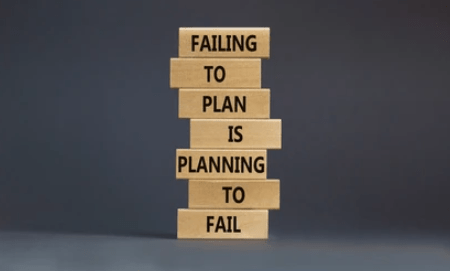
Defeatist planning habits—where project managers anticipate or enable failure during the planning phase—have been repeatedly shown to sabotage construction projects long before any physical work begins.
The “planning fails mindset” of a project manager—where poor or defeatist planning kills the project before it begins.
The very first tragedy of a project is not on the site, but in the mind and methods set during planning.
Introduction:
The majority of organizations experience a 70% project failure rate, with poor planning as the leading factor. Only 42% of firms report good alignment between planning and strategy. A Geneca study found that 75% of construction professionals lack confidence in project success, and over a quarter have always felt their projects were “doomed right from the start”.
The Hidden Cost of Defeatist Planning. When construction project managers approach planning with a mindset of defeat, expecting issues and under-committing to solutions, failure becomes a self-fulfilling prophecy.
Staggering Project Failure Rates
1] Planning Habits That Doom Projects :Inaccurate requirements (38%), poor communication (30%), and undefined project goals (30%) regularly cause project failure. Project sponsors are critical but often disengaged, compounding the weakness of early planning.
2] Financial Impacts and Productivity Losses :Nine out of ten construction projects run over budget, commonly due to unreliable planning and ineffective resource management.
Unclear planning reportedly wastes 11% of resources and up to 14 hours per week per manager on nonproductive tasks.68% of trades blame schedule mismanagement for lower worker productivity.
Early Warning Signs from Planning
1] Hidden indicators such as escalating costs, chronic schedule delays, and frequent scope changes are direct results of poor initial planning, not just onsite missteps.
2] Financial mismanagement starts in poor budget estimates, lack of cost tracking, and absence of risk controls from the outset.
3] Transforming the Planning Mindset :Effective planning means conducting detailed feasibility studies, aligning schedules and objectives, and engaging accountable sponsors at the earliest stages.
4] Continuous improvement, risk management, and robust project governance are required to overturn defeatist planning and drive project success.
Common defeatist planning habits in construction
Common defeatist planning habits in construction are patterns of negative, avoidant, or poorly structured behavior in project planning that undermine project outcomes well before work begins. These habits include:
1] Rushing Into Projects Without Preparation :Believing that early action is always better, some project managers skip thorough preconstruction planning, risk assessments, or feasibility studies, leading to costly errors and rework later.
2] Flawed Contractor Selection and Weak Contracts : Choosing contractors solely on cost, rather than proven experience and reliability, combined with vague or verbal agreements instead of detailed contracts, exposes the project to chronic delays, disputes, and abandonment.
3] Passive Oversight and Neglected Quality Control :Assuming that quality will “work itself out” and failing to enforce independent checks results in undetected defects or the use of substandard materials, setting the project on a path to failure from the start.
3] Constant Design Changes and Lack of Discipline : Allowing frequent, impulsive changes during construction, rather than freezing the design prior to the start, causes continuous delays and inflates costs, often due to uncertainty or lack of confidence in the plans.
4] Ignoring Structural Fundamentals for Surface Aesthetics : Prioritizing expensive finishes over structural soundness, waterproofing, or core mechanical systems, due to a lack of focus on basics, results in long-term issues and defeats the project’s purpose.
5] Disorganized Communication and Documentation :Relying on informal or undocumented instructions leads to confusion, missed deadlines, and disputes, as critical information is forgotten or misinterpreted by stakeholders and team members.
6] Payment Schedules Not Tied to Progress :Making payments not linked to clear project milestones encourages subpar performance and increases the risk of contractors abandoning work, reducing leverage and project control.
7] Procrastinating on Key Decisions :Delaying important choices about materials, design, or procurement until absolutely necessary creates bottlenecks, frustrates trade teams, and derails the construction schedule.
8] These habits stem from a lack of confidence, a defeatist outlook, or the assumption that problems are inevitable and unavoidable, leading to chronic project failure. Proactive, disciplined, and optimistic planning, reinforced by thorough documentation and strong oversight, is vital for overcoming these pitfalls.
Conclusion: The Groundbreaking Phase Is Mental, Not Physical. Construction projects are most vulnerable to failure before execution even begins—when the planning done by defeatist project managers sets up a cascade of problems. Strong proactive planning and empowered leadership are the foundation for successful builds.
 Project Management